Every year, after events such as the New York Marathon ballot, timelines fill with excitement, disappointment and unfortunately, frustration aimed in the wrong direction.
A familiar comment appears:
I didn’t get in, but charity runners did—why should a 6 or 7 hour runner get a place when faster runners missed out?
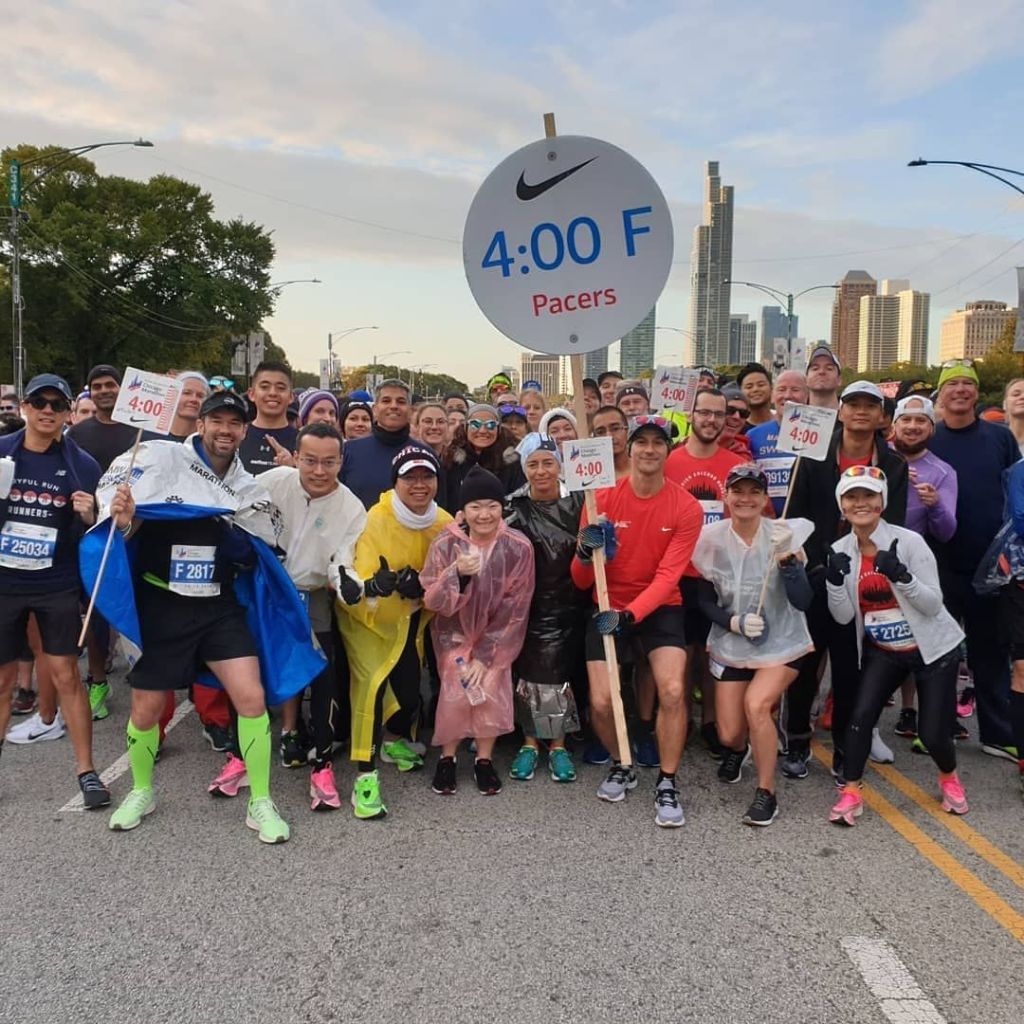
As someone who paces runners of all abilities, has completed the World Marathon Majors, and has spent years championing an inclusive approach to running, I want to offer a different perspective.
Because the real answer to “Who deserves to run a marathon?” is simple:
Anyone who has the courage to try.
But let’s break down the myths, especially around charity places, ballot systems, and pacing, because there’s a lot of misunderstanding about how marathons actually work.

1. The Different Ways People Enter World Marathon Majors
Major marathons (which are not limited to the World Marathon Majors) typically use a mix of the following entry types:
Ballot / Lottery
Mass entry, randomised, and fundamentally based on luck. For events high in demand like NYC, London, Tokyo, Chicago your running ability has zero impact on whether you’re selected.
Charity Places
Events often partner with charities to fundraise millions for good causes. These places are in addition to, not instead of, general entries.
This is important: Charity runners do not take places from ballot runners. Events set their capacity knowing how many places will be allocated to each category.
Time Qualifiers / Good For Age
Fast runners do have their own protected entry pathway. Events reserve specific places for those who earn them. These allocations don’t shrink because slower runners are also participating.
International Tour Operators, Clubs, Deferrals, Handcycles, Elite Athletes…
A marathon is a patchwork of entry types, all with their own allocation. The starting point isn’t “Who is faster?” It’s “How do we build a safe, diverse, financially sustainable global event?”

2. The Pace Myth: A 7‑Hour Runner Doesn’t Affect a 3‑Hour Runner
This might be the biggest misunderstanding I see.
Here’s the reality:
Course capacity is based on density at pace, not overall headcount.
A marathon course has a maximum number of runners who can safely occupy each section per hour.
– Slower runners are spread over more hours.
– Faster runners are concentrated into fewer hours.
This means: A group of 3 hour runners creates more density than the same number of 6 hour runners. Events deliberately mix runner types to avoid congestion. If a marathon only accepted fast runners, it would create huge spikes early, and long empty stretches later.
Slower runners actually help smooth the flow, not hinder it.
But it’s unfair if slower runners fill the field!
They don’t.
Events allocate:
– Ballot runners (all speeds)
– Charity runners (predominantly end up slower)
– Time qualifiers (predominantly faster)
Each category has its own cap and its own queue. This differs from event to event, based in how they choose to fill. For example, London Marathon has a high level of charity runners, whilst Boston Marathon is predominantly time qualifiers. So whichever your entry type, you only compete with your category, not others.
No fast runner loses a place because someone else is slower. They lose a place because more people entered than the event can take.

3. Running Is One of the Most Inclusive Sports in the World
Running is for everyone. The most important step is the one out of the door. Whether you run a marathon in 3 hours or 7 hours, the achievement is the same. I hope you are encouraged to run a marathon, and if you our check out my blog.
For me, running is a sport where a beginner can stand on the same start line as an Olympian. A charity runner can raise thousands for a cause that changed their life. A back of the pack runner might be overcoming illness, trauma, weight loss, grief, or fear. A 5:30 marathon might be harder fought than a 2:55.
The finish line medal is the same because the journey is the same, this includes: Months of training, early mornings, doubt, courage, pride. There’s no hierarchy of worthiness in running. Just runners.

4. Why Charity Runners Belong at Marathons
Charity runners don’t just “deserve” their places, they make races possible. They provide:
– Millions in funding for charities
– Global visibility for causes
– Diversity of stories and representation
– A broader sense of community
– Emotional fullness that promotes the event
It is also important to note that charity teams help fill the later waves that keep the course consistently populated and safe.
Marathon organisers plan for this. Slower runners are factored into the time limits, depending on cut offs.

5. So Who Should Run a Marathon?
Anyone who chooses a training plan, embraces the challenge, dreams of crossing that finish line and turns up to the start line.
Whether you’re:
– A Boston qualifier
– A couch to 5K finisher
– A charity fundraiser
– A ballot winner
– A back of the pack warrior
– A first‑timer
– A six‑star hopeful
You belong.
– Fast runners belong.
-Slow runners belong.
– Charity runners belong.
Running is not designed by pace. It is open to everyone brave enough to try.

Final Thoughts
I understand the disappointment and ballot results can break your heart. I have been there… but our frustration should never be aimed at other runners. We are all part of the same tribe. We all toe the same start line. And we all share the same finish line magic that makes marathons so special. A world where only the fastest can participate is not a world any of us want to run in.
We are better together. In a world where everyone belongs.
 pickupthepacepaul
this was one of my favorite blogs youve done!!
LikeLike
Thank you 😊
LikeLike